
SEO, AEO, GEO, AIO & SXO, Explained
A Small Business Owner’s Guide to the Five Ways Customers Find You Online
Why This Matters
For most of the last twenty years, “search” meant one thing: type something into Google, get a list of blue links, click one. Optimizing for that was a single, well-understood job — SEO.
That’s no longer the whole picture. Some of your customers still search that way. Others ask Siri a question out loud. Others get their answer from the AI-generated box that now sits above Google’s regular results, without clicking anything at all. And a growing number ask ChatGPT or Perplexity directly — “who’s a good [business type] near me?” — and never open a search engine in the first place.
Five terms have shown up to describe this shifting landscape: SEO, AEO, GEO, AIO, and SXO. They sound like alphabet soup, but they’re not competing strategies fighting for your attention. They’re five layers of the same goal — getting found, getting mentioned, and turning that visibility into a customer.
Think of it this way: SEO is having your storefront on the right street. AEO and AIO are being the answer a stranger gets when they ask someone on that street where to go. GEO is being the shop your neighbors mention by name when someone asks who’s good around here. SXO is what happens once a customer actually walks through your door — because none of the rest of it matters if they don’t stick around once they arrive.
The Five Ways Customers Find You
| Term | In Plain English | Where It Shows Up |
|---|---|---|
| SEO | Ranking on the traditional list of search results. | Google and Bing's blue links. |
| AEO | Being selected as the direct answer to a question. | Featured Snippets, voice assistants, AI Overviews. |
| GEO | Getting mentioned when an AI builds an answer from the web. | ChatGPT, Perplexity, Gemini responses. |
| AIO | Being named inside Google's AI-generated summary box. | The top of a Google search, above every link. |
| SXO | Turning the visitor who arrives into a customer. | Your own site's speed, layout, and calls to action. |
This is the foundation everything else sits on: structuring your website so Google and Bing understand what you do and rank you for the searches your customers are actually typing. It covers your page content, your technical setup, and the trust signals — like other sites linking to you — that tell a search engine your business is legitimate.
Think of it this way: SEO is making sure your business is listed correctly, in the right category, at the right address, in a directory everyone already checks first.
2. AEO — Answer Engine Optimization
AEO is about being selected as the direct answer to a question — not just one of ten results, but the one that gets read aloud by a voice assistant or pulled into a Featured Snippet box above the regular listings. It rewards content written in clear, direct language: a real question as a heading, followed immediately by a concise, specific answer.
Think of it this way: if SEO gets your business into the phone book, AEO is being the answer the operator gives when someone calls and asks a specific question.
3. GEO — Generative Engine Optimization
GEO is newer, and it works differently from the other two. It’s about being mentioned — by name — when someone asks an AI tool like ChatGPT or Perplexity a broader question, and the AI pulls together an answer from many sources across the web. You don’t control that page the way you control your own site, which is exactly why it takes patience: it’s built through credible mentions elsewhere, not through anything you can post directly.
Think of it this way: GEO is word of mouth, at internet scale. You can’t buy a good reputation among your neighbors — you earn it through consistent, mentionable work, and it spreads because other people vouch for you.
4. AIO — AI Overviews
AIO refers specifically to Google’s AI Overview — the AI-written summary that now sits at the very top of a Google search, above every sponsored and organic result. It’s the most visible real estate on the page. Technically, it’s a close cousin of AEO, since much of what earns a spot in a Featured Snippet also earns a mention in an AI Overview — but it rewards a bit more: fresh content, original information, and pages that match a searcher’s intent precisely.
Think of it this way: if AEO is being the answer the store clerk gives when asked, AIO is being the name printed on the sign right at the entrance, before the customer even has to ask anyone.
5. SXO — Search Experience Optimization
SXO is what happens after all of the above works. It’s the discipline of making sure a visitor who actually lands on your site can find what they came for, understand your pricing, and take the next step — instead of leaving because the page was slow, confusing, or buried the one thing they needed. A business can win at every layer above and still lose the customer right here.
Think of it this way: SEO, AEO, GEO, and AIO get the customer through the door. SXO is whether your store is laid out well enough for them to actually find the register.
How They Work Together
None of these replace each other — they hand off, one to the next:
GEO / AEO / AIO   →   bring your business into the conversation
SEO               →   secure the click when someone searches directly
SXO               →   turn that visit into a booking, call, or sale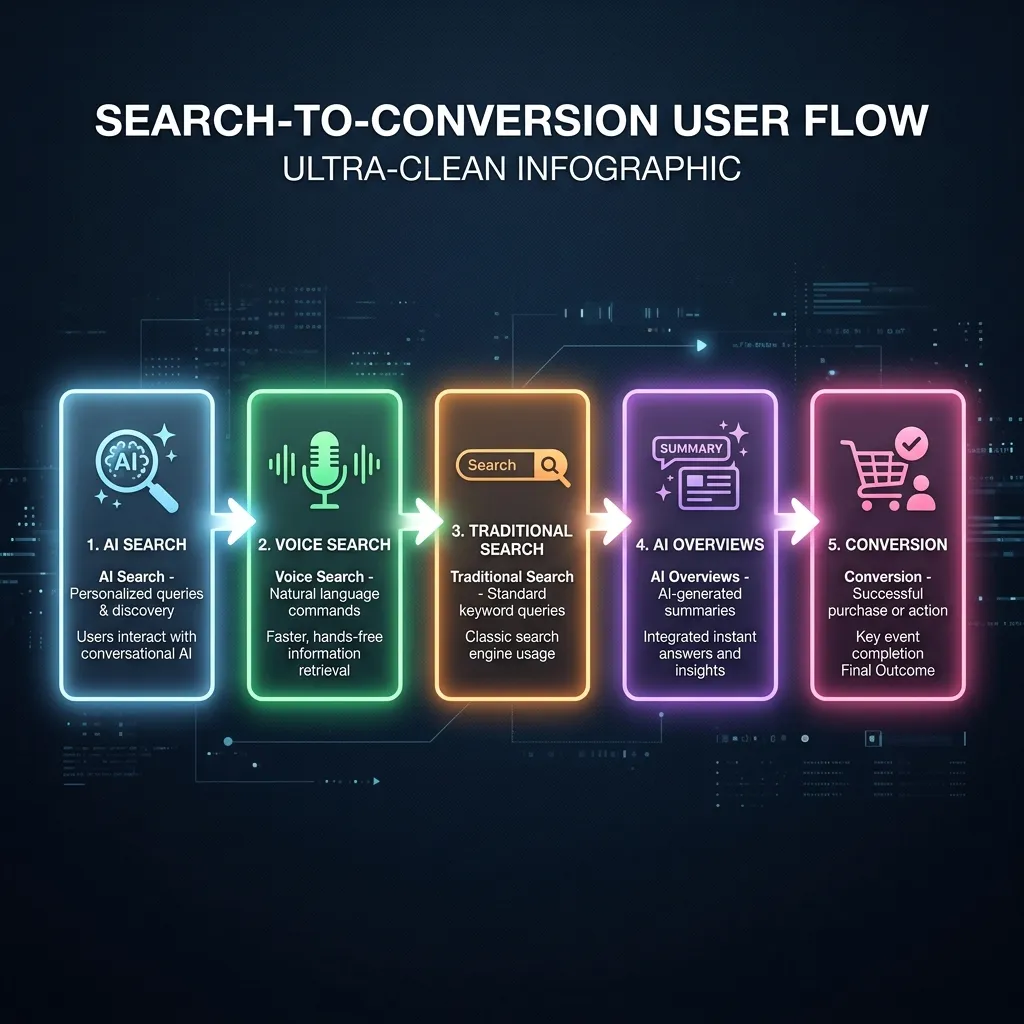
A business that’s well-known to AI tools but has a slow, confusing website will see that visibility fail to turn into revenue. A business with a fast, well-built site but no presence in AI answers is invisible to the growing share of people who now ask a chatbot before they ever open a search engine.
| Term | Primary Platforms | Optimization Focus | Success Metric |
|---|---|---|---|
| SEO | Google, Bing (Blue Links) | Page titles, keywords, site speed, authority links | Organic Impressions, Click-Through Rate (CTR) |
| AEO | Siri, Alexa, Google Featured Snippets | Q&A structured text, FAQ schemas, short lists | Position Zero placements, Voice share |
| GEO | ChatGPT, Perplexity, Gemini, Claude | Brand citations, mentions on high-authority blogs | AI engine mentions, conversational share of voice |
| AIO | Google Search (AI Overview blocks) | Fresh content, original data, specific intent matching | Overview card citations, referral traffic from summaries |
| SXO | Your website's user experience interface | Page speed, clear calls to action, easy navigation | Conversion Rate (Bookings, Calls, Form fills) |
A Worked Example
A local landscaping company gets mentioned in a neighborhood Facebook group, which a lawn-care blog later links to (GEO groundwork). A homeowner Googles “how much does mulching cost per yard in Georgia,” and the company’s FAQ page — with a clear, direct answer near the top — gets pulled into Google’s AI Overview, naming the business by name (AIO, built on solid AEO). A different homeowner searches “landscaping company near me” the traditional way, and the company’s Services page ranks third (SEO). Both visitors land on a site that loads in under two seconds, shows pricing up front, and has a “Get a Quote” button visible without scrolling (SXO) — so both of them actually book a call instead of bouncing to a competitor.
No single layer did the whole job. Together, they turned a Facebook comment into two booked jobs.
Common Mistakes We See
- Chasing AI visibility (GEO) before the basics (SEO, a fast site) are even in place.
- FAQ content buried in vague paragraphs instead of a direct question followed by a direct answer.
- No
FAQPageorLocalBusinessschema markup, so search engines and AI tools have to guess at information that could simply be labeled. - A site that ranks well but loads slowly or hides pricing, quietly losing the visitors it worked hard to earn.
- Treating this as a one-time project instead of an ongoing habit — AI Overviews in particular favor content that stays current.
Our Process at Risal Systems
Step 1 — Audit
- We check where you currently stand across traditional search, Featured Snippets, and AI tools like ChatGPT and Google’s AI Overview.
- We identify which layer is costing you the most visibility right now.
Step 2 — Prioritize
- For most small businesses, that means solid technical SEO and a well-structured FAQ page first — the foundation the other layers build on.
Step 3 — Build
- We implement schema markup, restructure content into clear question-and-answer formats, and tighten up the on-page experience that turns visits into customers.
Step 4 — Monitor
- We track how you show up across regular search results and AI-generated answers, and adjust as those platforms keep evolving — which they will.
What This Means for Your Business
You don’t need to become an expert in five overlapping acronyms. You need a website that’s built correctly once, so it naturally competes across all of them. For a small business, that looks like:
- Showing up whether a customer searches on Google, asks a voice assistant, or asks ChatGPT.
- Being the business named in an AI-generated answer, not just one link among ten.
- A site that turns the visibility you’ve earned into actual calls, bookings, and sales — not just traffic.
- A foundation that keeps working as search itself keeps changing, instead of needing to be rebuilt every time a new platform shows up.
Getting Started
If you’re not sure where you currently stand across any of this, that’s an easy thing to check. A short audit will show you exactly how your business shows up in traditional search and in AI-generated answers — and which layer is worth fixing first.
Reach out to Risal Systems and we’ll walk you through it in plain language, step by step.
Related reading: