
The Realistic Timeline Breakdown
When planning a web project, it helps to understand how different construction methods affect the schedule. Much like building a home, the timeline is directly tied to the level of customization, engineering complexity, and planning required.
| Option | Typical Timeline | Underlying Process |
|---|---|---|
| DIY / Template Platform (Wix/Squarespace) | 1 – 2 Weeks | Selecting a theme, dragging-and-dropping elements, writing copy directly in the browser. |
| Freelancer / WordPress Template | 4 – 6 Weeks | Setting up hosting, installing a commercial theme, configuring plugins, and inputting content. |
| Custom-Engineered Static Site (Astro) | 6 – 10 Weeks | Discovery, user experience design (Figma), custom coding (zero-theme), accessibility audits, and local SEO engineering. |
Here is what actually happens in each category.
DIY Website Builders: 1–2 Weeks
If you build the site yourself using platforms like Wix or Squarespace, the timeline is entirely up to you.
Why it is fast
You are working with pre-built grids and components. The technical setup (hosting, SSL, database) is managed automatically by the platform behind a subscription fee. If you have your copy written and your images ready, you can drag and drop a 5-page site together in a few evenings.
The compromise
You skip the design phase (you must adapt your content to the template’s boxes) and the technical optimization phase. The speed is achieved by running heavy, generic JavaScript files under the hood, which is why these sites frequently struggle on mobile PageSpeed metrics.
Freelancer Template Build (WordPress): 4–6 Weeks
This is the most common agency process. A freelancer or boutique studio takes your content and maps it onto a pre-existing WordPress theme (like Divi or Elementor).
Why it takes 4–6 weeks
While they aren’t writing code from scratch, they are customizing layouts, configuring page builder plug-ins, setting up forms, and adjusting CSS to match your branding. There is also a feedback loop—they will show you drafts at the 2-week and 4-week marks, and revisions take time.
The compromise
The site is built on top of a visual builder engine, which makes it easy to edit but adds substantial database query overhead. Performance optimization is usually handled after-the-fact by bolting on caching plug-ins, which can introduce software conflicts and security vulnerabilities.
Custom-Engineered Static Build (Astro): 6–10 Weeks
When a site is engineered from the ground up specifically for your business goals, the process is divided into distinct, structured phases to guarantee performance, SEO authority, and conversion rate efficiency.
See our Growth Engine page for a breakdown of the custom architecture we deploy.
Here is the realistic weekly schedule for a professional custom build:
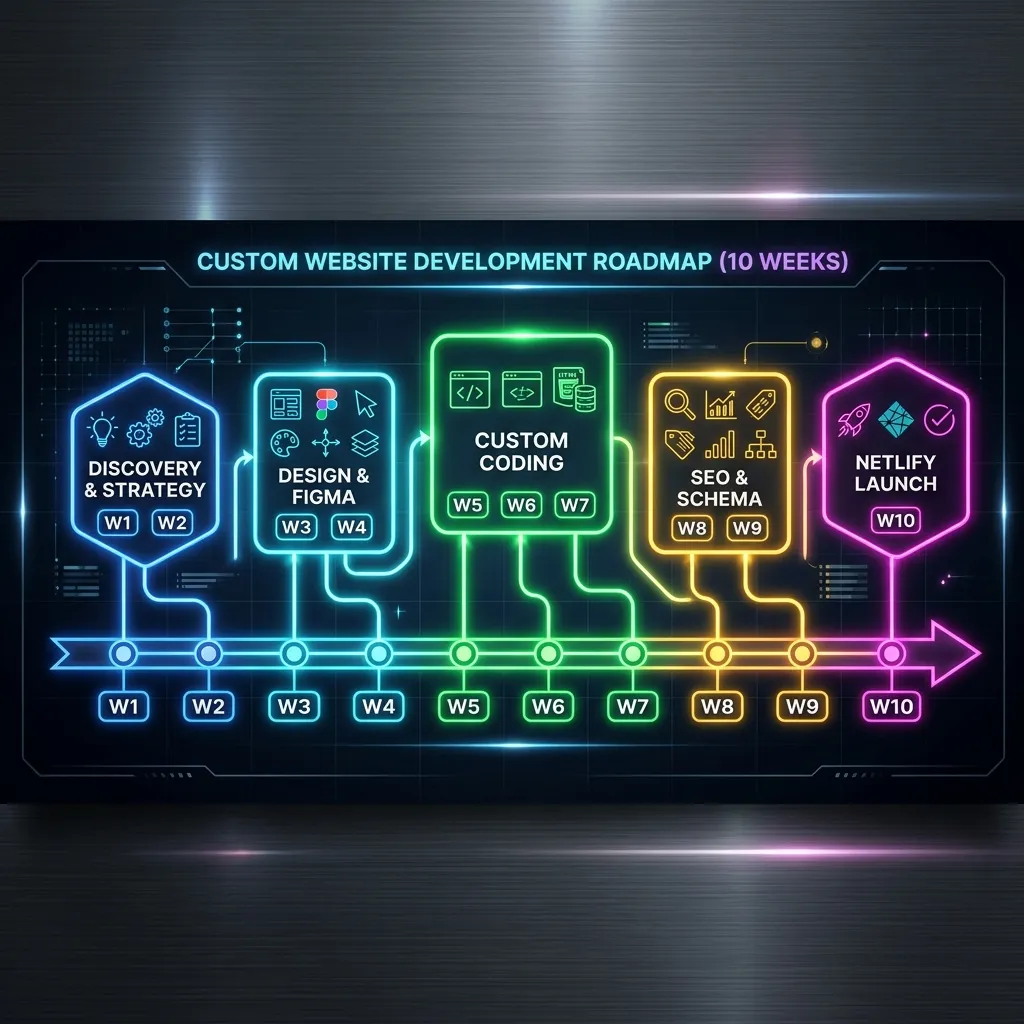
Phase 1: Discovery & Strategy (Weeks 1–2)
Before writing a single line of code, we define the site structure, user flows, and search intent. We analyze what terms your competitors are ranking for and map out a site architecture that will allow you to compete.
Phase 2: Design & Prototyping (Weeks 3–4)
We design custom wireframes and high-fidelity layouts in Figma. This includes mobile-first layout patterns, accessibility checks (WCAG compliance), and interactive states. You see exactly what the site will look like and how it will function before any coding begins.
Phase 3: Custom Coding & Performance Setup (Weeks 5–7)
Our developers write clean HTML, modern CSS, and lightweight vanilla JavaScript. There are no bloated page builders, no heavy themes, and no third-party plugin dependencies. Every line of code is dedicated to rendering your pages instantly.
Phase 4: Local SEO & Content Integration (Weeks 8–9)
We build in your local SEO signals, configure structured JSON-LD schemas (such as LocalBusiness and Service markups), and integrate optimized web assets (including WebP/AVIF format conversions for images).
Phase 5: Testing & Deployment (Week 10)
We conduct cross-browser compatibility checks, run mobile responsiveness audits, and run full PageSpeed tests. The final static site is deployed to Netlify’s global CDN network, ensuring high-speed global delivery and maximum uptime.
What Delays Web Development Projects the Most?
Across hundreds of projects, we’ve found that the biggest factor moving the launch date isn’t coding complexity—it is client bottlenecks.
- The Content Bottleneck (The #1 Delay): A design cannot be finalized and code cannot be written without knowing the copy it is presenting. When clients delay writing their pages, providing service descriptions, or delivering high-resolution branding assets, the project stalls.
- Review & Feedback Loops: If it takes two weeks to get feedback on a design wireframe, the project schedule slips by two weeks. Fast, consolidated review cycles keep the build moving.
- Third-Party API Integrations: If your site needs to talk to a custom inventory system, a proprietary CRM, or a booking scheduler, configuring the authentication and mapping data fields adds testing cycles.
A custom site takes longer because it is built to perform, not just to exist. Shortcuts during the engineering phase are paid for later in slow load speeds, poor SEO rankings, and lost leads.
If you want to know more about the long-term ROI of this process, read our financial comparison of template vs. custom builds. And if you are ready to start planning your business website, contact us today for a direct timeline quote.
Related reading:
Let's build a timeline for your project
We'll give you a realistic schedule from discovery to launch based on your specific requirements—no generic templates, no missed deadlines.